Best IPTV Streaming Devices for 2026: Hardware Benchmarks & Buying Guide
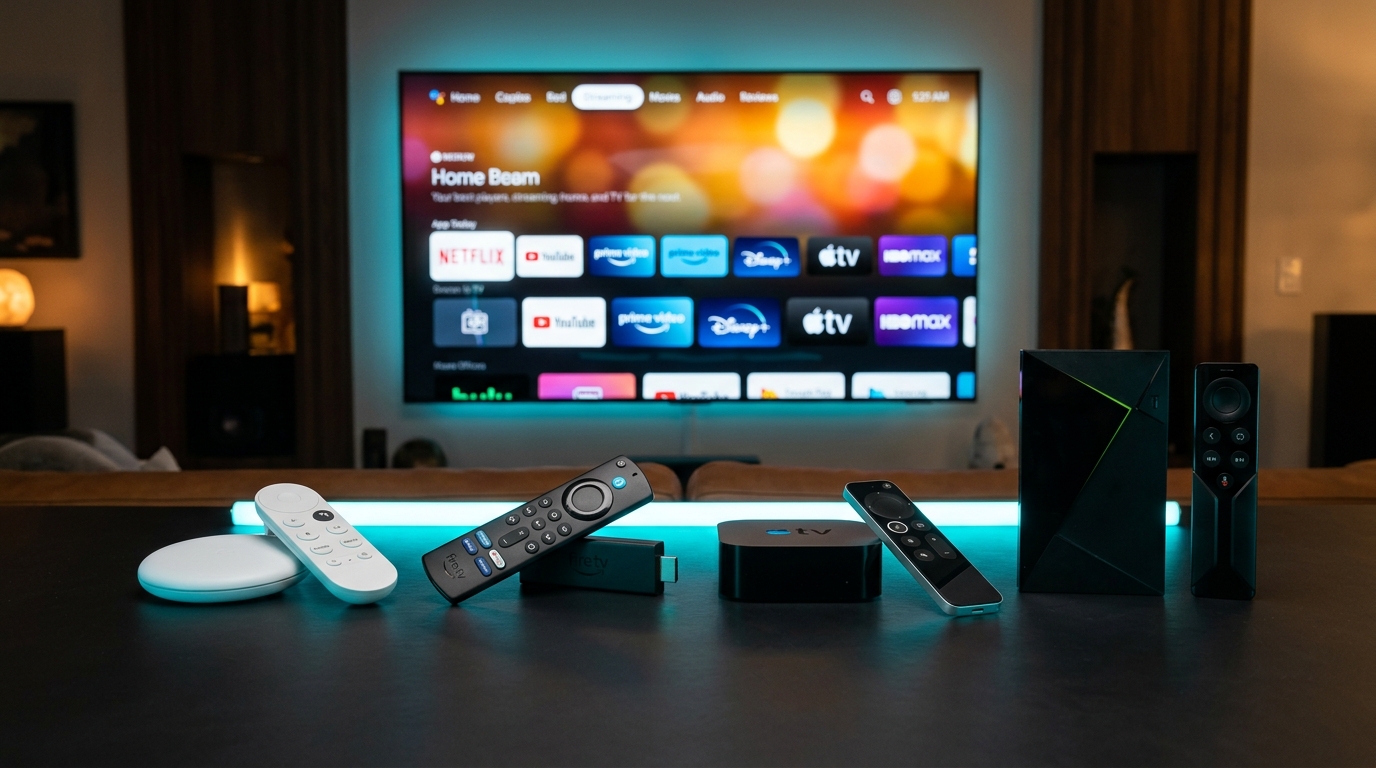
When viewers experience stream stuttering, sluggish channel zapping, or video buffering, the natural consumer instinct is to blame their domestic internet connection or their television provider. However, in modern digital broadcasting, your physical streaming hardware is responsible for exactly half of the playback equation.
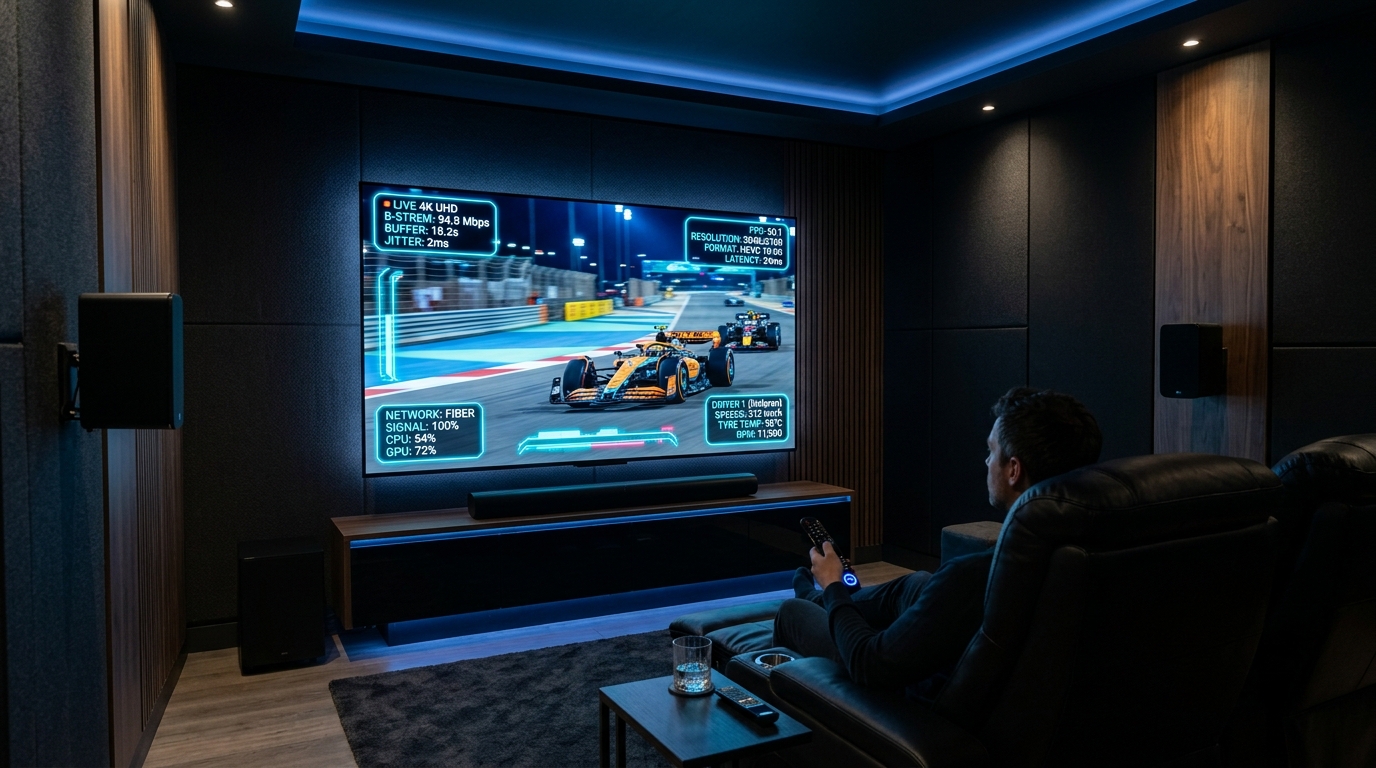
An IPTV stream delivered over TereaTV's global network is not a passive analog signal. It is a compressed, high-bitrate digital transport stream that must be received across a local network interface, unpacked in operational system memory (RAM), decoded in real time by a graphics processor (VPU), synchronized with an independent multi-channel audio track, and output over HDMI to your display panel at up to sixty progressive frames per second.
Underpowered, budget streaming hardware with weak processors, inadequate thermal dissipation, or insufficient RAM will struggle to maintain high-bitrate 4K 60FPS feeds—even when connected to a pristine 1-Gigabit fiber optic internet connection.
Whether you are looking for an affordable plug-and-play streaming stick for a bedroom television or an enterprise-grade home theater powerhouse with hardware AI upscaling, this comprehensive 2026 benchmark guide analyzes the premier IPTV devices on the market, comparing silicon architectures, codec decoders, memory envelopes, and real-world playback performance.
1. The 5 Hardware Pillars of IPTV Streaming Performance
Before comparing specific models, one must understand the technical components that dictate IPTV streaming performance. A device engineered for web browsing or basic YouTube video playback is not necessarily equipped to manage a massive broadcast catalog.
THE 5 HARDWARE PILLARS:
1. System-on-Chip (SoC):  CPU cores manage playlist navigation, EPG parsing, and UI responsiveness.
2. System Memory (RAM):   Provides buffer space for 4K video frames and caches channel databases.
3. Dedicated VPU:         Hardware silicon decodes H.265/AV1 bitstreams at zero CPU load.
4. Thermal Architecture:  Active fans or large heatsinks prevent thermal clock throttling.
5. Network Interfaces:    Gigabit Ethernet & Wi-Fi 6E guarantee packet arrival continuity.
Pillar 1: System-on-Chip (SoC) & CPU Architecture
The central processor manages operating system tasks, channel list navigation, search indexing, and Electronic Program Guide (EPG) database parsing.
- Modern High-Performance Cores (ARM Cortex-A73 / Cortex-A78 / Apple Silicon): Process hundreds of thousands of channel entries effortlessly, rendering smooth 60 FPS user interfaces and instantaneous search results across TereaTV's live channel catalog.
- Aging Budget Cores (ARM Cortex-A53): Found in low-end generic TV boxes and entry-level streaming sticks. Cortex-A53 cores struggle under heavy database queries, resulting in frustrating 5-second navigation freezes, dropped frames during menu scrolling, and sluggish boot times.
Pillar 2: Operational System Memory (RAM)
RAM is the physical workspace where your IPTV application unpacks channel playlists and maintains active video ring buffers:
- 1.0 GB to 1.5 GB RAM (Critical Bottleneck): Standard on budget streaming sticks. When a media player parses an extensive global playlist while buffering a 4K video stream, available memory drops below operating system thresholds. The device triggers Out-Of-Memory (OOM) exceptions, abruptly crashing the streaming app back to the home screen.
- 2.0 GB RAM (Acceptable Baseline): Provides sufficient memory headroom to support modern media players like TiviMate or IPTV Smarters Pro alongside a calibrated 3-second video buffer.
- 3.0 GB to 4.0 GB RAM (Enterprise Grade): Found on flagship hardware (Nvidia Shield, Apple TV 4K, Formuler Z11 Pro Max). Easily caches weeks of multi-channel EPG data, supports instant background app switching, and eliminates memory exhaustion completely.
Pillar 3: Dedicated Video Processing Unit (VPU)
When a media player renders a high-bitrate 4K stream, the device's CPU should be doing virtually zero heavy lifting. A well-engineered streaming chip features a specialized Video Processing Unit (VPU)—a dedicated hardware block hardwired with physical silicon circuits designed exclusively to decode video algorithms:
- Native H.265 (HEVC Main 10) Hardware Decoding: Non-negotiable for modern 4K sports streaming.
- Native AV1 Hardware Decoding: The emerging open-source codec standard.
- Hardware Deinterlacing (YADIF / Bob): Converts legacy 1080i interlaced broadcast feeds into smooth progressive 1080p 60FPS video without jagged comb artifacts.
Pillar 4: Thermal Architecture & Power Envelopes
Digital video decoding generates significant thermal energy.
- 5-Watt HDMI Dongles (Passive Dissipation): Compact streaming sticks rely on tiny internal aluminum heat spreaders trapped against the blistering rear panel of an operating television. Under sustained 4K decoding, core silicon temperatures surge past 85°C, triggering automated thermal throttling that cuts processor clock speeds in half, inducing severe stuttering.
- 15-Watt Set-Top Boxes (Active Cooling): Devices like the Nvidia Shield TV Pro incorporate physical cooling fans and extruded aluminum heatsinks, maintaining cool 55°C operating temperatures under heavy, continuous broadcast loads.
Pillar 5: Network Interfaces (Gigabit Ethernet vs. Wi-Fi 6E)
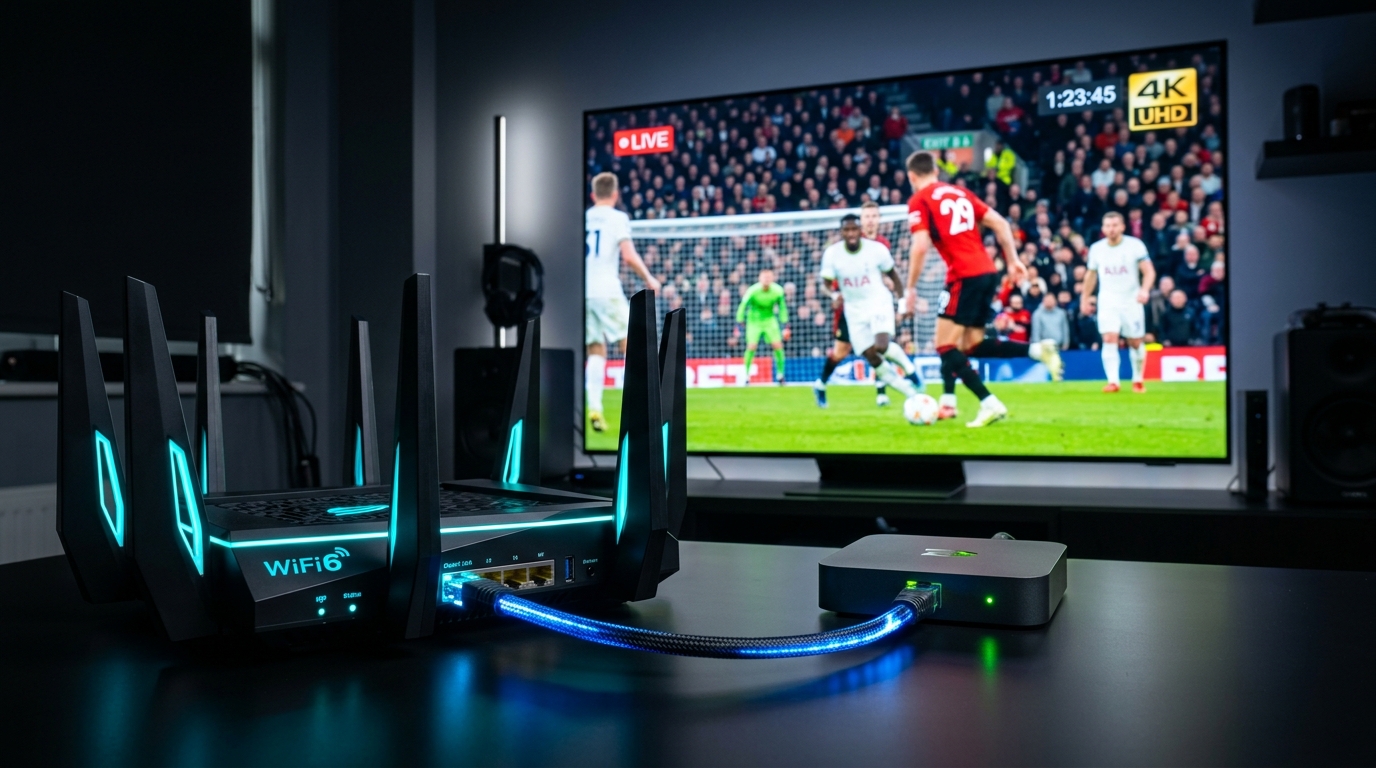
- Native Gigabit Ethernet (1,000 Mbps): Delivers full-duplex data transfer, sub-millisecond jitter, and zero radio interference. The ultimate gold standard for broadcast television.
- Wi-Fi 6 / 6E (OFDMA & BSS Coloring): Dramatically reduces wireless packet collisions in congested apartment complexes by utilizing clean 5 GHz and 6 GHz spectrum.
2. Category 1: Flagship Home Theater Powerhouses
For home theater enthusiasts demanding uncompromising visual fidelity, uncompressed multi-channel audio passthrough, and zero operational lag, flagship set-top boxes represent the pinnacle of streaming hardware.
FLAGSHIP HARDWARE BENCHMARKS:
Nvidia Shield TV Pro:  [Tegra X1+ | 3GB RAM | Gigabit LAN | AI Upscaling | Dolby Atmos TrueHD]
Apple TV 4K (Gen 3):  [A15 Bionic | 4GB RAM | Gigabit LAN | Match Frame Rate | Clean tvOS UI]
1. Nvidia Shield TV Pro (The Undisputed Android Champion)
Even years after its initial release, the Nvidia Shield TV Pro remains the undisputed gold standard for Android-based digital television streaming.
- System-on-Chip: Nvidia Tegra X1+ (256-core Nvidia Maxwell GPU)
- RAM / Storage: 3 GB RAM / 16 GB Flash Storage (Expandable via dual USB 3.0 ports)
- Networking: Native 10/100/1000 Gigabit Ethernet, Wi-Fi 5 (802.11ac) 2×2 MIMO
- Audio Support: Full Dolby Atmos (TrueHD) and DTS:X Bitstream Passthrough via HDMI 2.0b
- Operating System: Official Android TV 11 (Google Play Store certified)
Why It Excels for IPTV:
- AI-Enhanced Upscaling (4K 60FPS): The Shield's proprietary Tegra X1+ silicon features a deep-learning neural network that analyzes lower-resolution video feeds in real time. It upscales 720p and 1080p sports broadcasts to 4K resolution with astonishing edge sharpness, texture reconstruction, and zero artificial haloing.
- Unrivaled Audio Passthrough: The Shield Pro is one of the few devices on earth capable of bitstreaming uncompressed Dolby TrueHD, Dolby Atmos, and DTS-HD Master Audio directly to high-end home theater AVR receivers.
- Active Thermal Cooling: Equipped with a whisper-quiet internal centrifugal fan and substantial heatsink, the Shield Pro runs indefinitely without thermal throttling.
- Flawless TiviMate Host: Operates TiviMate Premium with microscopic latency, instant channel zapping, and background multi-channel recording directly to connected Network Attached Storage (NAS) or external SSDs.
Potential Limitations:
- Higher purchase price ($199 USD).
- Lacks native AV1 hardware decoding (relies on HEVC and H.264).
2. Apple TV 4K (3rd Generation - 2022/2026)
For households integrated into the Apple hardware ecosystem, the Apple TV 4K (Wi-Fi + Ethernet edition) delivers unmatched processing power and display synchronization.
- System-on-Chip: Apple A15 Bionic (6-core CPU, 5-core GPU, 16-core Neural Engine)
- RAM / Storage: 4 GB LPDDR4X RAM / 128 GB NVMe Storage
- Networking: Gigabit Ethernet, Wi-Fi 6 (802.11ax) with 2×2 MIMO, Thread mesh networking
- Video Standards: 4K 60FPS, HDR10+, Dolby Vision Profile 5/8
- Operating System: tvOS (Completely ad-free, silky 120Hz interface)
Why It Excels for IPTV:
- Colossal Computational Power: The A15 Bionic chip is orders of magnitude more powerful than any Android TV streaming chip. Playlist parsing, search indexing, and app navigation execute instantaneously with zero frame drops.
- System-Level Frame Rate Matching: Apple's Match Dynamic Range and Match Content Frame Rate protocol operates flawlessly. When tuning into a 50 FPS European football match on TereaTV, tvOS instantly shifts the physical display panel to 50Hz, eliminating 3:2 pulldown judder completely.
- iPhone Acoustic Synchronization: Features an automated calibration tool that uses your iPhone's microphone to calibrate living room acoustic latency, ensuring perfect lip-sync across connected soundbars and Apple HomePods.
- Premier Apple TV Players: Applications like iPlayTV, Snappier IPTV, and TiviMax deliver gorgeous, hardware-accelerated interfaces.
Potential Limitations:
- tvOS is a walled garden; sideloading custom APK files is restricted.
- Does not passthrough raw DTS-HD MA bitstreams (decodes internally to uncompressed Linear PCM 7.1).
3. Category 2: Dedicated IPTV Set-Top Boxes
While generic streaming boxes run general-purpose Android TV software, dedicated IPTV set-top boxes are engineered specifically for linear television broadcasting.
DEDICATED SET-TOP ARCHITECTURE:
Formuler Z11 Pro Max: [Realtek RTD1319C | 4GB DDR4 | Gigabit LAN | MYTVOnline3 Exclusive Portal]
3. Formuler Z11 Pro Max (The Broadcast Specialist)
Manufactured by Formuler, the Z11 Pro Max is widely recognized as the premier dedicated IPTV set-top box in the global broadcast industry.
- System-on-Chip: Realtek RTD1319C (Quad-Core ARM Cortex-A55, Mali-G57 GPU)
- RAM / Storage: 4 GB DDR4 RAM / 32 GB eMMC Storage
- Networking: Gigabit Ethernet (1,000 Mbps), Dual-Band Wi-Fi 6 (AX)
- Hardware Codecs: 4K 60FPS AV1, H.265 (HEVC), H.264, HDR10+
- Operating System: Android 11 with Google Play Store support
Why It Excels for IPTV:
- MYTVOnline3 (MOL3) Exclusive Application: The defining feature of Formuler hardware is its proprietary MYTVOnline3 software. Engineered from the ground up for broadcast television, MOL3 offers the fastest channel zapping in the industry (sub-1 second), automated multi-provider aggregation, universal search across multiple subscriptions, and 7-day catch-up recording.
- Native AV1 Silicon Decoder: Fully supports next-generation AV1 video decoding in hardware, guaranteeing future-proof compatibility as streaming infrastructures migrate to AV1.
- Ergonomic GTV-BT1 Bluetooth Remote: Formuler bundles an ergonomic, full-sized broadcast remote control with dedicated channel numbers, guide shortcuts, recording buttons, and programmable television volume controls.
Potential Limitations:
- Lacks official Netflix/Amazon Prime 4K DRM certification (primarily intended as a dedicated IPTV receiver).
4. Category 3: High-Performance Mid-Range Streaming Sticks & Boxes
For secondary bedrooms, family kitchens, or budget-conscious viewers, mid-range streaming dongles offer an exceptional balance of price and performance ($35 to $60 USD).
MID-RANGE STREAMING BENCHMARKS:
Fire TV Stick 4K Max:   [MediaTek MT8696T | 2GB RAM | Wi-Fi 6E | 4K 60FPS AV1 | Fire OS 8]
Chromecast Google TV 4K: [Amlogic S905X3  | 2GB RAM | Wi-Fi 5  | Clean Google TV UI]
Onn 4K Pro Box:          [Amlogic S905X4  | 3GB RAM | 32GB Flash | Built-in Ethernet & USB 3.0]
4. Amazon Fire TV Stick 4K Max (2nd Gen - 2023/2026)
Amazon's flagship streaming stick represents the most popular, cost-effective hardware solution for IPTV streaming worldwide.
- System-on-Chip: MediaTek MT8696T (Quad-Core 2.0 GHz ARM Cortex-A55, IMG GE9215 GPU)
- RAM / Storage: 2 GB LPDDR4 RAM / 16 GB Internal Storage
- Networking: Wi-Fi 6E Tri-Band (2.4 GHz, 5 GHz, 6 GHz)
- Hardware Codecs: 4K 60FPS AV1, H.265 (HEVC), H.264, Dolby Vision, HDR10+
Why It Excels for IPTV:
- Wi-Fi 6E Spectrum Access: Access to pristine 6 GHz Wi-Fi spectrum eliminates interference from neighboring networks in congested residential apartment blocks.
- Hardware AV1 and HEVC: Decodes high-bitrate 4K sports on TereaTV's live feeds at smooth 60 FPS without dropped frames.
- Massive App Ecosystem: Fully supports side-loading and running TiviMate Premium, IPTV Smarters Pro, and WireGuard VPNs.
Critical Optimization Note:
Because the Firestick 4K Max operates within a small 5-Watt power envelope, always utilize the bundled HDMI extension cable to suspend the stick away from the hot television chassis, preventing thermal clock throttling. Pair with an OTG Gigabit Ethernet adapter for optimal stability.
5. Onn 4K Pro Streaming Box (Walmart Exclusive Powerhouse)
The Onn 4K Pro has disrupted the budget streaming hardware market, offering set-top box features at an entry-level price point ($50 USD).
- System-on-Chip: Amlogic S905X4 (Quad-Core Cortex-A55, Mali-G31 MP2 GPU)
- RAM / Storage: 3 GB RAM / 32 GB Internal Storage
- Networking: Built-in 10/100 Ethernet Port, Wi-Fi 6
- Hardware Ports: Integrated USB 3.0 Type-A Port (Supports direct external hard drives)
- Operating System: Official Google TV (Android 12)
Why It Excels for IPTV:
- 3 GB RAM at Budget Pricing: Having 3 full gigabytes of RAM prevents out-of-memory crashes when parsing large channel playlists from TereaTV.
- Abundant Storage: 32 GB of storage allows you to install dozens of applications and cache weeks of EPG program guide data without warning prompts.
- Built-in USB 3.0 & Ethernet: Direct connection for external storage drives and wired networking without needing third-party OTG splitters.
5. Category 4: Smart TVs with Integrated Operating Systems
Many subscribers prefer not to purchase an external streaming box, choosing instead to install IPTV applications directly onto their television's integrated smart operating system:
- Samsung Smart TVs: Running Samsung Tizen OS
- LG Smart TVs: Running LG webOS
- Sony / TCL / Hisense Smart TVs: Running Android TV / Google TV
INTEGRATED SMART TV vs. DEDICATED STREAMING BOX:
Integrated Smart TV (Tizen / webOS):
- Weak dual-core/quad-core low-power mobile CPUs designed for basic menus.
- Restricted RAM (typically 1.0 GB shared with display processing).
- Limited app selection (IBO Player, Smart IPTV, Nanomid); no TiviMate.
- Factory processing introduces heavy input lag and motion judder.

Dedicated External Streaming Box (Nvidia Shield / Apple TV / Firestick):
- Powerful multi-core processors with dedicated VPU hardware.
- Abundant RAM (2 GB to 4 GB) dedicated entirely to media playback.
- Access to premier media players with advanced EPG and multi-connection tools.
- Regular operating system updates and performance longevity.
The Technical Reality of Built-in Smart TV Apps
While streaming directly through an app on your Samsung or LG television is convenient, integrated TV operating systems suffer from severe engineering constraints:
- Low-Power Budget Silicon: Television manufacturers allocate the vast majority of their hardware bill-of-materials (BOM) to display panels, backlights, and power supplies. The integrated "smart" motherboard utilizes low-cost silicon designed primarily to render TV menus and switch HDMI inputs.
- Memory Exhaustion: Smart TVs rarely allocate more than 1 GB of RAM to third-party applications. Loading a comprehensive catalog containing tens of thousands of channels frequently chokes the TV's memory, causing the app to freeze or reboot the television.
- Application Limitations: Neither Samsung Tizen nor LG webOS supports advanced player engines like TiviMate. Users are restricted to basic third-party players (such as Smart IPTV, IBO Player, or Nanomid) which lack advanced features like Auto Frame Rate (AFR) matching, dual-screen multi-view, and automated cloud backup.
- Engineering Verdict: If you stream occasionally, built-in TV apps are functional. However, for a premium, buffer-free home theater experience, spending $40 to $199 on a dedicated external streaming box is the single best investment you can make.
6. Silicon Deep-Dive: Dedicated VPU vs. Software CPU Decoding
To understand why underpowered hardware fails during live 4K sports, examine the physical silicon architecture inside a streaming media processor:
HARDWARE SILICON DECODING PIPELINE:
[Incoming Compressed Stream (H.265 / AV1)]
                 │
                 ▼
[Hardware Video Processing Unit (VPU)] ──> Hardwired Transistor Logic
                 │
                 ▼
[Decoded Uncompressed Frames Generated in 2ms]
- CPU Load: 2% (Cold & Idle)
- Device Temperature: 48°C (Stable)
- Dropped Frames: 0 (Glass-Smooth 60 FPS!)

SOFTWARE CPU FALLBACK PIPELINE (Underpowered Hardware):
[Incoming Compressed Stream]
                 │
                 ▼
[CPU Cores Forced to Compute Math in Code]
                 │
                 ▼
- CPU Load: 100% (Saturated!)
- Silicon Core Temperature: Spikes past 88°C
- Thermal Throttling Engaged: Clock Halved
- Dropped Frames: 1,800 frames lost in 2 minutes! (Severe Stutter & Freezing)
The Role of Dedicated Silicon Logic
A modern System-on-Chip contains millions of microscopic transistors arranged into specialized functional blocks:
- CPU (Central Processing Unit): Designed for flexible, general-purpose sequential logic (e.g., executing application code, handling network sockets, responding to remote control clicks).
- VPU (Video Processing Unit): An application-specific integrated circuit (ASIC) hardwired with physical logic gates configured to execute one mathematical task: calculating Discrete Cosine Transforms (DCT) and inverse quantization for video codecs like H.264, H.265, and AV1.
When an IPTV player renders a high-bitrate 4K stream on compliant hardware, the VPU handles 100 percent of the decompression workload. The CPU operates at a relaxed 2 to 5 percent utilization, generating virtually no heat.
The Software Decoding Thermal Cascade
When an aging generic TV box encounters an advanced 10-bit color profile (HEVC Main 10) or AV1 sports feed from TereaTV that its silicon VPU cannot decode, the media player falls back onto Software CPU Decoding.
Because mobile ARM processors lack the clock speed to compute billions of matrix transforms every second in software, the CPU instantly pegs at 100 percent utilization. Silicon core temperatures surge past critical safety thresholds within minutes.
Internal thermal sensors trigger emergency clock throttling, slashing CPU speeds from 1.8 GHz down to 800 MHz. The device can no longer decode frames fast enough to maintain pace with the broadcast clock, resulting in catastrophic dropped frames, audio/video desynchronization, and frozen screens.
7. Comprehensive 10-Point Hardware Benchmark Comparison Matrix
Use this engineering benchmark table to compare the technical attributes of the industry's leading streaming devices:
| Hardware Device | Retail Price | SoC Architecture | RAM Memory | Storage | Native Ethernet | Wi-Fi Standard | Hardware Decoders | Audio Passthrough | IPTV Overall Grade |
|---|---|---|---|---|---|---|---|---|---|
| Nvidia Shield TV Pro | ~$199 | Tegra X1+ (256-core GPU) | 3 GB DDR4 | 16 GB Flash | 1,000 Mbps Gigabit | Wi-Fi 5 (ac) | H.265, H.264, VP9 | Dolby TrueHD, DTS:X | A+ (The Gold Standard) |
| Apple TV 4K (3rd Gen) | ~$149 | Apple A15 Bionic | 4 GB LPDDR4 | 128 GB NVMe | 1,000 Mbps Gigabit | Wi-Fi 6 (ax) | H.265, H.264, AV1 | Multichannel LPCM 7.1 | A+ (Peak Power & Fluidity) |
| Formuler Z11 Pro Max | ~$180 | Realtek RTD1319C | 4 GB DDR4 | 32 GB eMMC | 1,000 Mbps Gigabit | Wi-Fi 6 (ax) | H.265, H.264, AV1 | Dolby Digital, DTS | A+ (Dedicated Broadcast) |
| Fire TV Stick 4K Max | ~$59 | MediaTek MT8696T | 2 GB LPDDR4 | 16 GB Flash | Requires OTG Adapter | Wi-Fi 6E (6 GHz) | H.265, H.264, AV1 | Dolby Atmos, DD+ | A- (Best Value Dongle) |
| Onn 4K Pro Box | ~$50 | Amlogic S905X4 | 3 GB DDR4 | 32 GB Flash | 10/100 Mbps Built-in | Wi-Fi 6 (ax) | H.265, H.264, AV1 | Dolby Atmos, DD+ | A- (Best Budget Box) |
| Chromecast Google TV | ~$49 | Amlogic S905X3 | 2 GB DDR4 | 8 GB Flash | Requires Adapter | Wi-Fi 5 (ac) | H.265, H.264, VP9 | Dolby Digital Plus | B+ (Solid Mid-Range) |
| Formuler Z10 SE | ~$95 | Realtek RTD1319 | 2 GB DDR4 | 4 GB eMMC | 10/100 Mbps LAN | Wi-Fi 5 (ac) | H.265, H.264 | Dolby Digital | B (Entry Dedicated) |
| Fire TV Stick Lite | ~$29 | MediaTek MT8695D | 1 GB DDR4 | 8 GB Flash | Requires Adapter | Wi-Fi 5 (ac) | H.265, H.264 | Stereo / DD+ Passthrough | D (Underpowered / Lags) |
| Generic Android S905W | ~$25 | Amlogic S905W (Budget) | 1 GB DDR3 | 8 GB Flash | 10/100 Mbps LAN | 2.4 GHz Only | Basic H.264 / H.265 | Basic Stereo | F (Fails 4K 60FPS Sports) |
8. Buying Recommendations by User Persona & Living Room Setup
To select the ideal streaming hardware for your household, match your viewing habits to the following engineering profiles:
RECOMMENDATION FRAMEWORK:
1. Home Theater Purist / Audiophile ──> Nvidia Shield TV Pro (Bitstream Passthrough & AI Upscale)
2. Apple Ecosystem Household         ──> Apple TV 4K (A15 Power & Match Content Frame Rate)
3. Dedicated Linear TV Viewer        ──> Formuler Z11 Pro Max (MYTVOnline3 & Broadcast Remote)
4. Budget-Conscious 4K Streamer      ──> Amazon Fire TV Stick 4K Max OR Onn 4K Pro Box
5. Secondary Bedroom / Kitchen TV    ──> Onn 4K Box ($20) or Fire TV Stick 4K
1. The Home Theater Purist & Audiophile
- Primary Device: Nvidia Shield TV Pro
- Rationale: If your living room features a dedicated Audio/Video Receiver (AVR), external Dolby Atmos soundbar, or 4K OLED display, the Shield Pro is essential. Its AI-enhanced upscaling sharpens broadcast sports, and its uncompromised HDMI audio passthrough transmits lossless surround sound bitstreams directly to your audio processor.
2. The Apple Ecosystem Household
- Primary Device: Apple TV 4K (Wi-Fi + Ethernet Model)
- Rationale: If your family utilizes iPhones, iPads, and MacBooks, the Apple TV 4K is unbeatable. Its A15 Bionic chip delivers the smoothest user interface on the market, while its automated Match Frame Rate protocol guarantees zero judder during European football and international cinema.
3. The Dedicated Linear TV Fanatic
- Primary Device: Formuler Z11 Pro Max
- Rationale: If your primary focus is traditional television channel browsing, recording live broadcasts, and checking program guides, Formuler's exclusive MYTVOnline3 application delivers the fastest, most authentic linear broadcast experience on earth.
4. The Value-Focused Mainstream Streamer
- Primary Device: Amazon Fire TV Stick 4K Max (2nd Gen) or Onn 4K Pro
- Rationale: At approximately $50, these devices deliver 90 percent of the performance of flagship boxes. They feature hardware AV1/HEVC decoders, modern Wi-Fi 6 connectivity, and ample power to run TiviMate or IPTV Smarters Pro with liquid-smooth 4K 60FPS playback.
9. Frequently Asked Questions (FAQ)
Can I stream 4K IPTV using an older Amazon Firestick?
If you own an older Fire TV Stick (such as the 2nd Generation Firestick or Firestick Lite equipped with only 1 GB of RAM and older Cortex-A53 processors), streaming modern high-bitrate 4K sports feeds will be frustrating. These older devices lack the RAM headroom to parse extensive global playlists and overheat quickly, resulting in dropped frames and application crashes. For reliable 4K 60FPS streaming on TereaTV, upgrade to at least the Fire TV Stick 4K (2nd Gen) or Fire TV Stick 4K Max.
Does a dedicated IPTV box like Formuler provide better picture quality than an Apple TV 4K?
Both devices output pristine digital video bitstreams over HDMI to your display panel. The Formuler Z11 Pro Max excels primarily in software workflow: its proprietary MYTVOnline3 app is custom-tailored for channel zapping, EPG organization, and PVR recording. The Apple TV 4K possesses substantially more raw processing power (A15 Bionic) and superior system-level frame rate matching. Both deliver reference-grade visual fidelity when paired with high-bitrate streams from TereaTV.
Why do cheap $25 generic Android TV boxes on Amazon perform so poorly?
Generic unbranded TV boxes (often marketed with names like "T95," "X96 Mini," or "MXQ Pro") utilize bottom-tier refurbished silicon (such as low-clocked Rockchip or Allwinner processors), slow DDR3 memory, and outdated Android mobile firmware designed for smartphones rather than televisions. They lack official Google Play Store certification, operate without DRM licenses (locking Netflix and Prime to standard definition), possess zero hardware thermal cooling, and lack compliant VPU decoders, resulting in catastrophic stuttering on live sports feeds.
Do I need a USB-to-Ethernet adapter for my streaming stick?
While not mandatory if your streaming stick sits within direct line-of-sight of a high-speed 5 GHz Wi-Fi 6 router, an OTG Gigabit Ethernet adapter is highly recommended. Wired Ethernet eliminates wireless packet jitter and radio interference entirely, providing the consistent sub-millisecond transmission timing required for uninterrupted 4K 60FPS live sports.
10. Conclusion: The TereaTV Hardware Standard
Your streaming media player is the physical gateway to your home entertainment. By investing in hardware equipped with at least 2 GB of RAM, dedicated silicon HEVC/AV1 hardware decoders, adequate thermal dissipation, and high-speed network interfaces, you permanently eliminate the hardware bottlenecks that degrade digital video playback.
Once your hardware foundation is optimized, pairing it with an enterprise-grade broadcast infrastructure ensures you extract the full visual and acoustic potential your display panel was engineered to produce.
TereaTV's global streaming service delivers pristine multi-channel entertainment across all certified devices:
- Over 50,000 live channels and 200,000 VOD assets.
- True 4K and Full HD 60FPS high-bitrate sports feeds.
- Universal compatibility with TiviMate, Apple TV (iPlayTV), Formuler (MYTVOnline3), Firestick, and Smart TVs.
- Distributed anti-freeze CDN edge servers with 99.9% uptime.
Upgrade your streaming experience today. Explore our flexible IPTV subscription packages, browse our extensive channel lineup, or connect with our 24/7 technical team for personalized hardware setup assistance.